
Preserving the Past. Inspiring the Future.
Preserve.
Rebrand.
Promote.

Our Mission
The Honey Hole, Inc. preserves and interprets underdocumented family, community, labor, and cultural history; safeguards significant places, records, and lived experiences; and transforms that heritage into educational, civic, and workforce opportunities that strengthen communities and inspire future generations.
Our Model
The Honey Hole, Inc. preserves the history of Huntsville’s working-class communities, rebrands their legacy through cultural storytelling and historic preservation, and promotes heritage-based education, tourism, and economic opportunity. Through community engagement and preservation initiatives, we connect the Honey Hole’s industrial and railroad history to Huntsville’s future growth and innovation.
Our Vision
Historically Underserved Communities Were Not Peripheral to Progress—They Were Fundamental to It.
Our vision is to create a nationally recognized model in which preservation becomes a tool for community renewal, cultural pride, educational advancement, workforce readiness, and economic development.
Our History
The Honey Hole, Inc. was established to preserve, interpret, and promote the history of historically underserved working-class communities whose labor, ingenuity, and perseverance helped build America’s industrial, economic, and technological foundations. The organization emerged from a growing recognition that many communities that contributed significantly to regional and national progress have often been overlooked in traditional historical narratives, despite their central role in shaping the places where they lived and worked.
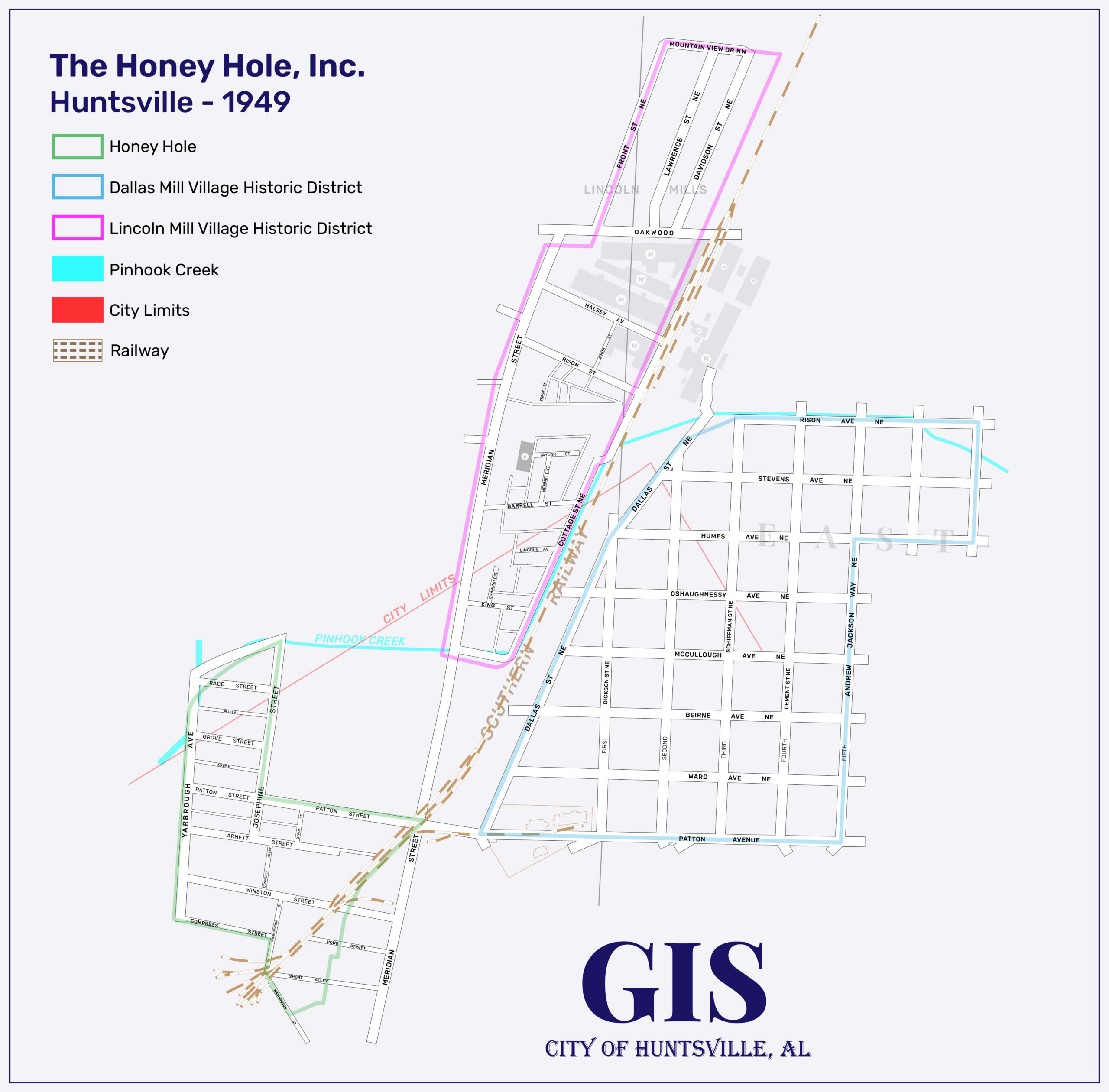
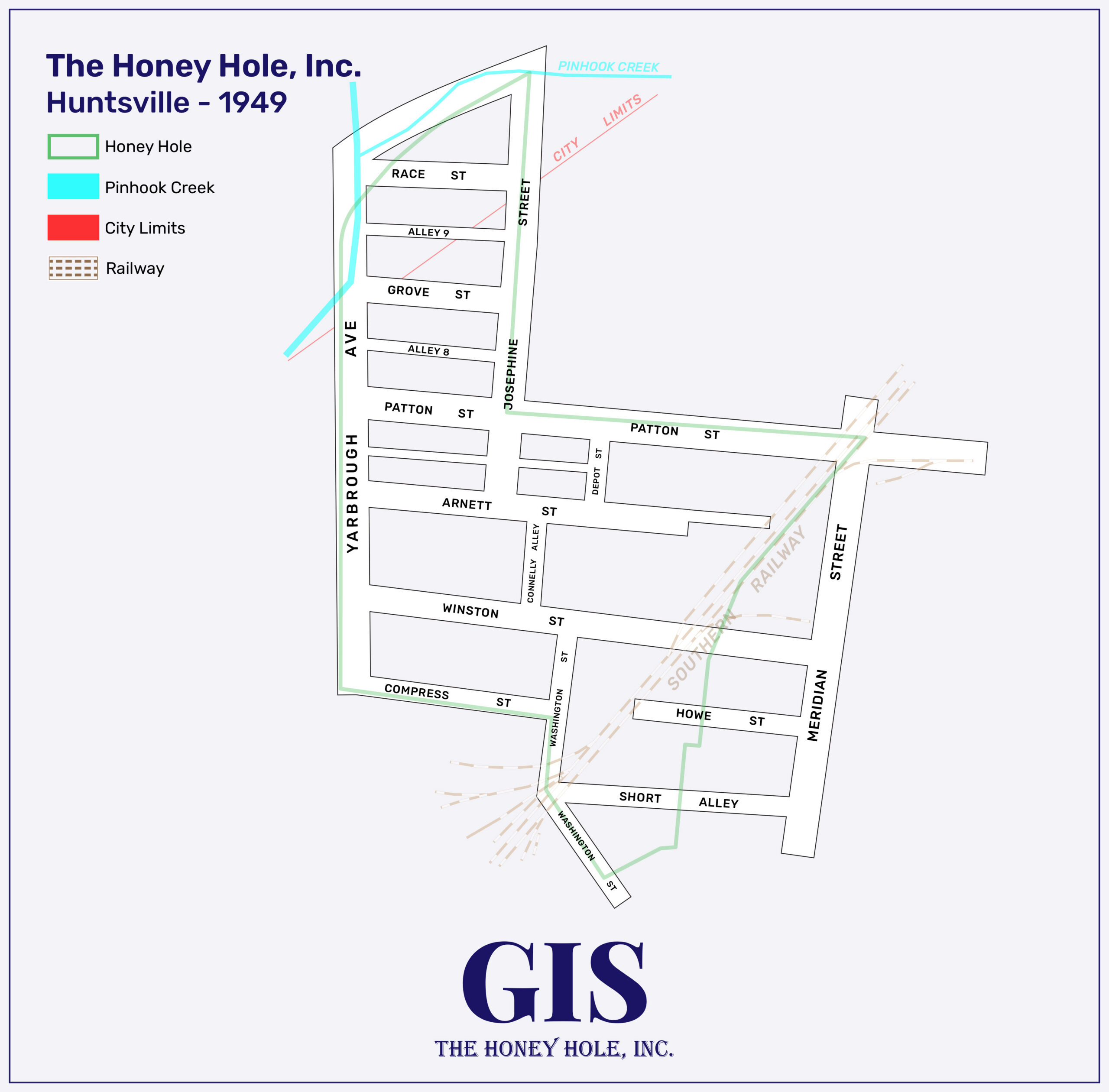
The organization’s name is inspired by the historic Honey Hole community of Huntsville, Alabama, a working-class neighborhood located near the railroad corridor that connected generations of residents to employment, industry, and opportunity. Like many communities across the American South, the Honey Hole developed alongside the growth of railroads, manufacturing, transportation, and commerce. The community’s residents contributed their labor to the industries and infrastructure that helped transform Huntsville from a railroad town into a center of advanced technology, aerospace innovation, and economic development.
The Honey Hole, Inc. was founded on the belief that historically underserved communities were not peripheral to progress—they were fundamental to it. The organization recognizes that churches, schools, neighborhoods, railroads, factories, mills, and other community institutions served as the foundation upon which larger economic and technological achievements were built. Yet the stories of the workers, families, and communities behind those achievements often remain undocumented, underrepresented, or at risk of being lost.
In response, The Honey Hole, Inc. developed a community-centered model built around three core principles: Preserve, Rebrand, and Promote. Through historic preservation, archival research, oral history documentation, community engagement, workforce development, educational programming, and heritage tourism initiatives, the organization seeks to preserve significant places and stories, reframe public understanding of their historical importance, and promote new opportunities for community revitalization and economic growth.
The organization’s flagship initiative, “From Railroads to Robotics,” explores the relationship between Huntsville’s railroad heritage, the Memphis & Charleston Freight Depot, the Honey Hole community, and the city’s emergence as a global center of technology and innovation. Through historical research, preservation planning, and community engagement, the project demonstrates how generations of workers and neighborhoods contributed to Huntsville’s transformation and how those stories can inspire future workforce development and educational opportunities.
Building upon this model, The Honey Hole, Inc. has begun expanding its work to other communities across Alabama. Through the proposed “From Steel to Skills” initiative in Gadsden, Alabama, the organization is partnering with community institutions to document the history of the Westside neighborhood, Republic Steel, Galilee Baptist Church, and other community assets while creating pathways for education, workforce development, and neighborhood revitalization.
Today, The Honey Hole, Inc. serves as a preservation-centered community development organization dedicated to transforming historic assets into engines of opportunity. By connecting labor history, community heritage, education, and economic development, the organization seeks to ensure that the communities that helped build progress are recognized, preserved, and empowered to help shape its future.
Through its work, The Honey Hole, Inc. continues to advance its vision that historically underserved communities were not peripheral to progress—they were fundamental to it.